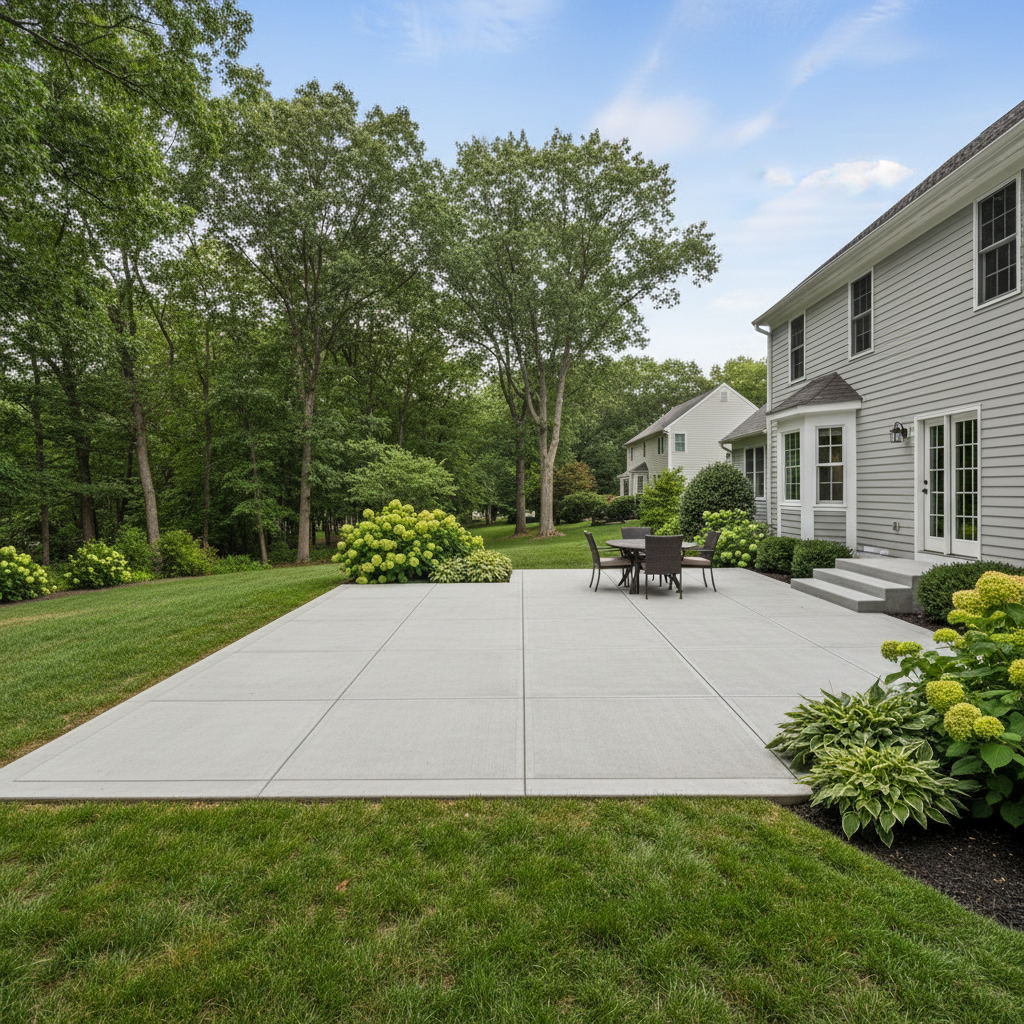
Are you tired of staring out at a patch of mud or an old cracked slab every time you look out your back door? Pouring a new concrete patio sounds straightforward enough, but New Look Concrete & Masonry sees homeowners run into the same avoidable traps all the time right here in East Greenwich. Between our heavy clay soils down near Frenchtown and the brutal freeze-thaw cycles we get rolling off Narragansett Bay every winter, you cannot afford to cut corners.
Here is what you need to watch out for so your hard-earned money actually goes toward something that lasts.
Skimping on the Base Preparation
The single biggest mistake happens before a single drop of concrete is even mixed. If a contractor tells you they can just pour a slab right over your existing backyard dirt, pack your bags and run. Our local soil shifts constantly with moisture and temperature drops. You need a solid compacted gravel sub-base of at least four to six inches. Without it, your brand-new Concrete Patio is going to crack, sink, and heave within a couple of seasons.
Chasing the Lowest Bid
Everyone loves a bargain, but in the concrete business, a suspiciously low estimate is a giant red flag. If one quote comes in thousands of dollars lower than everyone else, ask yourself what they are leaving out. Are they skipping wire mesh or fiber reinforcement? Are they pouring it too thin? New Look Concrete & Masonry frequently gets calls from people trying to fix a crumbling patio they had installed just two years prior by the cheapest guy they could find on a local Facebook group.
Ignoring Drainage and Slope
Water has to go somewhere, and you definitely do not want it pooling against your home foundation or icing over into a skating rink right outside your sliding glass door. A proper Concrete Patio needs a subtle slope—usually an eighth to a quarter inch per foot—away from the house. If your contractor does not talk about drainage or grade during the planning phase, they are not paying attention to the details that matter.
Taking the time to plan your project right and hiring someone who knows how Rhode Island weather treats masonry will save you a massive headache down the road. Do your homework, ask tough questions about the sub-base, and make sure you are getting a patio built to handle our New England winters.