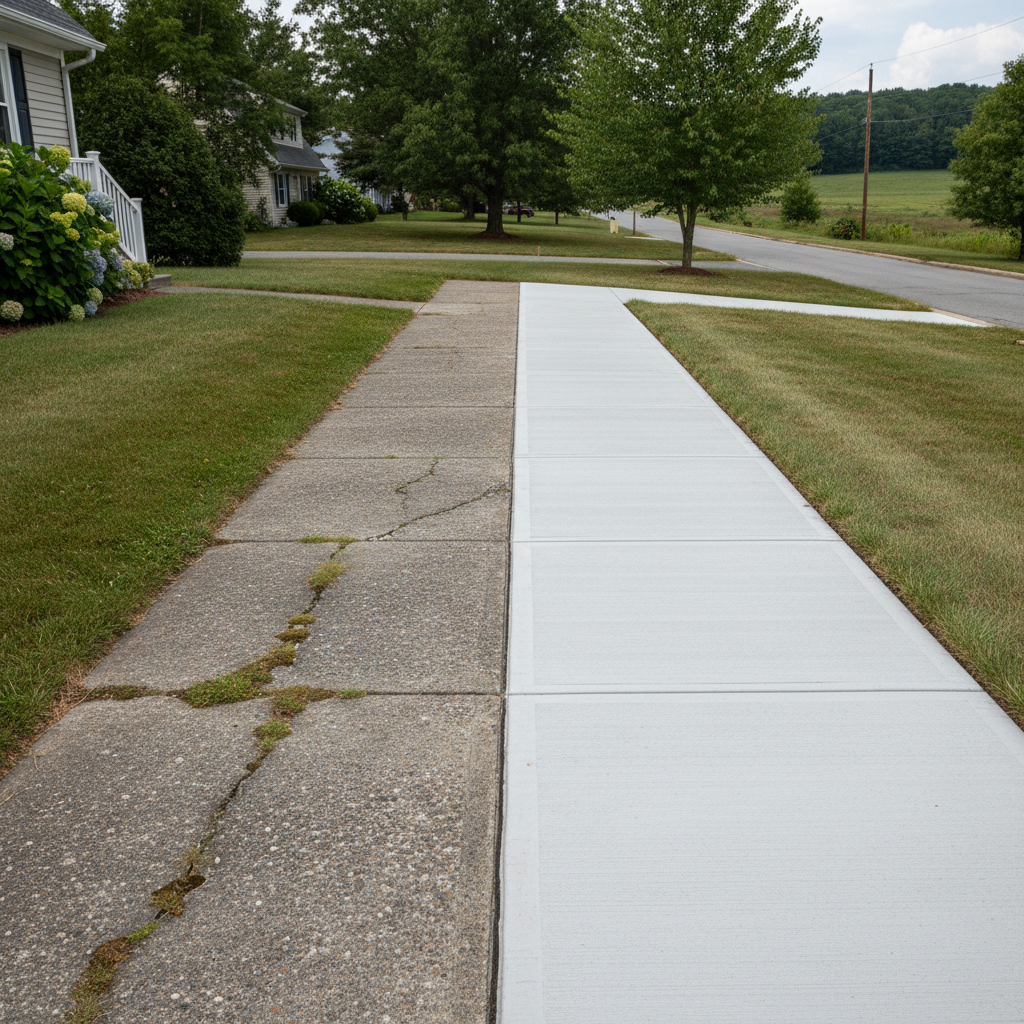
Your front walkway takes a beating year-round, especially around here. Between the heavy coastal moisture rolling off the bay and those brutal freeze-thaw cycles we get every January, picking the right sidewalk material matters. If you are staring down a crumbling old walkway and trying to figure out whether to pour fresh concrete or lay down pavers, we will look at how these two options actually stack up in the real world.
Upfront Costs and Installation
Pouring a standard broom-finish concrete sidewalk is usually going to hit your wallet a bit lighter upfront than a full custom paver installation. With poured concrete, you are paying for prep work, forming, pouring, and finishing. It goes down fast when the weather cooperates. Pavers, on the other hand, take more labor. Every single stone gets handled, leveled, and cut to fit your curves and steps. That extra time means higher initial labor costs, no two ways about it.
The Rhode Island Freeze-Thaw Factor
Here is where our local weather forces you to think long-term. East Greenwich soil holds plenty of moisture, and when the temperature plunges below freezing, that water expands. Poured concrete is a monolith. If the sub-base is not prepped right—deep enough to get below the frost line or using the right gravel pack—that slab is going to crack. Once a crack starts, salt water and freeze cycles widen it fast. Pavers handle ground movement much better because they are individual units. If the ground shifts a bit under a paver sidewalk, the joints absorb the movement instead of snapping right down the middle. But watch out for poor compaction; cheap paver installs will dip and trap puddles in no time.
Maintenance Realities
Nobody wants to spend their weekends weeding a walkway. Poured concrete gives you a smooth, continuous surface where weeds only manage to sprout in expansion joints or neglected cracks. A quick pressure wash in the spring usually keeps it looking clean. Paver sidewalks require a little more ongoing attention. You will be dealing with polymeric sand in the joints. Over a few years, ants dig it out, weeds find a foothold, and you might need to sweep in fresh sand or hit them with a weed torch. On the flip side, if a utility line needs to run under your yard or a tree root heaves a section of sidewalk, fixing a paver walkway is as simple as pulling the stones up, fixing the base, and relaying them. Try doing an invisible patch on a cracked concrete slab.
Curb Appeal and Aesthetics
Poured concrete has come a long way from the boring gray slab of fifty years ago. You can add color tints or clean saw cuts to give it a modern look. But pavers offer unmatched texture and pattern variety that can really tie your front yard into your home's stonework or foundation style. If you want crisp, classic lines or a rustic New England tumbled stone look, pavers win hands down.
My Recommendation for East Greenwich Homes
If you want a clean, low-maintenance path that handles heavy foot traffic and you do not mind the risk of minor hairline cracking down the road, a well-placed, reinforced poured concrete sidewalk installed by New Look Concrete & Masonry is tough to beat for value. But if your property has tricky grading, mature trees with aggressive roots, or you just love the look of individual stonework, investing in a properly installed paver sidewalk will save you headaches. Just make sure whoever does the job spends twice as much time on the gravel base as they do laying the surface.