You're thinking about a new patio, walkway, or even a driveway, and you've got two main options staring you down: poured concrete or concrete pavers. Which one's right for your East Greenwich home? It's a question I get asked all the time, and honestly, there's no single 'best' answer for everyone. But I can tell you what I've seen work and what doesn't, especially with our crazy New England weather.
Poured Concrete: The Classic Choice
When most folks think concrete, they picture the stuff we pour right on site. It's been around forever, and for good reason. It's solid, dependable, and can be pretty versatile.
Cost: Generally, poured concrete is cheaper up front. You're paying for materials and labor to get it mixed, poured, and finished. For a basic slab, it's usually the more budget-friendly option.
Durability: A well-installed concrete slab is tough. It can handle heavy loads, like your car on a driveway, without much fuss. The trick is in the prep work – proper sub-base, good drainage, and control joints are key. If you skip those steps, you're asking for trouble down the road.
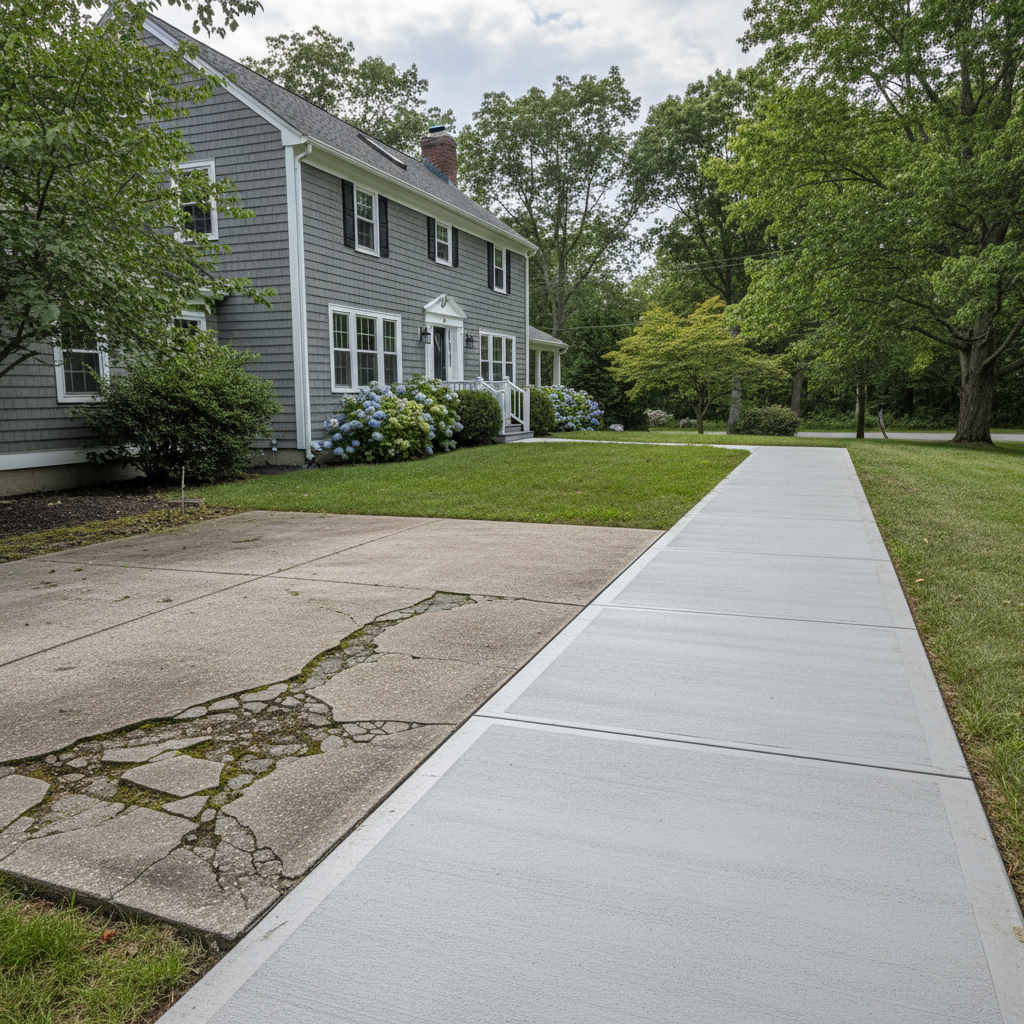
Maintenance: Pretty low. You might need to seal it every few years to protect it from stains and moisture, but that's about it. The big downside? Cracks. Even with control joints, concrete can crack. Once it cracks, it's a permanent feature. You can patch it, but it'll never look quite the same.
Appearance: It used to be just gray, but now you can do a lot more. Stamped concrete can mimic stone or brick, and you can add color. It gives a clean, continuous look, which some people really prefer.
Concrete Pavers: The Flexible Alternative
Pavers are individual units, usually concrete, that interlock to form a surface. Think of them like a giant, heavy-duty puzzle for your yard.
Cost: This is where pavers usually cost more initially. The material itself is often pricier per square foot, and the installation is more labor-intensive. Each paver needs to be laid carefully, and the base preparation is even more critical than with poured concrete.
Durability: Individual pavers are incredibly strong. Because they're not a single, rigid slab, they can flex and move slightly with the ground. This is a huge advantage here in East Greenwich, especially with our freeze-thaw cycles. That movement means they're much less likely to crack from frost heave or settling. If one gets damaged, you just pull it out and replace it.
Maintenance: You'll need to sweep sand into the joints periodically to keep them locked tight. Weeds can also try to grow in those joints, so a good polymeric sand and occasional maintenance are important. Stains can be spot-treated, and as I said, individual pavers are replaceable.
Appearance: This is where pavers really shine for a lot of homeowners. There are tons of colors, shapes, and patterns. You can create a really custom, high-end look that's tough to achieve with just poured concrete. They have a more textured, natural feel.
My Take for East Greenwich Homeowners
Given what we deal with here in Rhode Island – those brutal winters, the freezing and thawing, the occasional wet spring – I lean towards pavers for most residential applications where aesthetics and long-term flexibility are a priority. Especially if you're building a patio or a decorative walkway. That ability for pavers to move and not crack like a solid slab is a huge deal.
Think about a typical house in the Hill and Harbour district, for example. You want something that looks good, adds curb appeal, and can stand up to the elements without looking beat up after a few seasons. Pavers often deliver that better than poured concrete over the long haul.
Now, if you need a really basic, no-frills utility slab for a shed or a very large, simple driveway where cost is the absolute number one factor, poured concrete still makes sense. Just make sure whoever's doing it knows what they're doing with the base and control joints. That's non-negotiable.
At New Look Concrete & Masonry, we do both, and we do them right. But if you ask me for a recommendation for your backyard oasis or a beautiful front path that'll last, I'll probably be talking to you about pavers. They just handle our specific conditions better, and they give you a lot more design freedom. It's an investment, sure, but it pays off in durability and curb appeal.