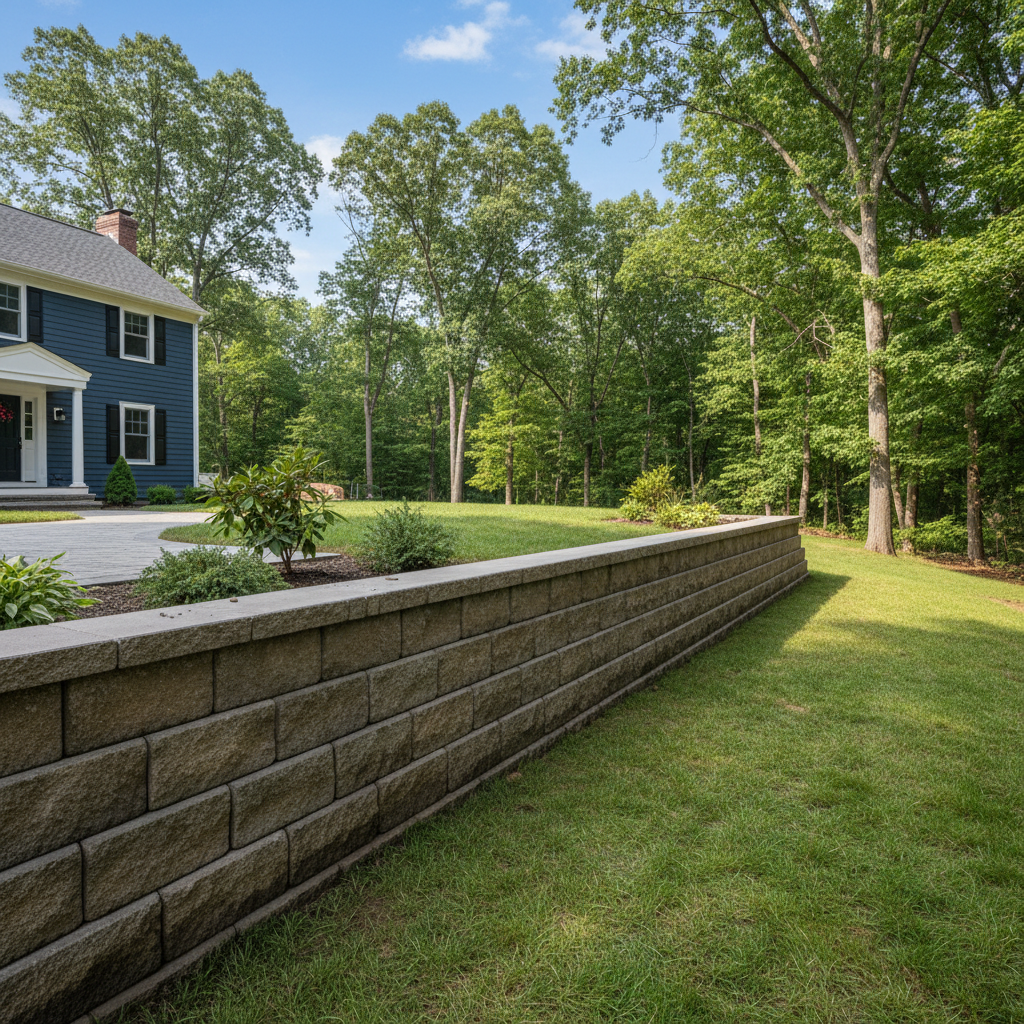
You’ve got a slope in your yard, or maybe you’re looking to create some usable flat space, and a retaining wall seems like the perfect solution. Great idea! A well-built concrete retaining wall can add serious value and function to your East Greenwich home. But I’ve seen enough projects go sideways over the years to know there are some common pitfalls you absolutely need to avoid.
Ignoring the Ground Beneath Your Feet
This is probably the biggest mistake I see, and it’s a silent killer for retaining wall projects. People often just assume the ground is solid enough, or they don't even think about it. But here in East Greenwich, especially in areas closer to the water or with a lot of glacial till, you can have all sorts of soil conditions. You might hit bedrock, or you might find yourself digging into soft, sandy loam that won't hold a wall properly without serious reinforcement. You can't just plop a heavy concrete wall on unstable ground and expect it to last. If you don't get a proper soil analysis, or at least have an experienced contractor like us at New Look Concrete & Masonry take a good look, you're building on shaky foundations. Literally. That wall will lean, crack, or even collapse, and then you're paying to fix it all over again.
Underestimating Drainage Needs
Water is the enemy of any retaining wall. It's relentless. I’ve seen homeowners get a beautiful wall installed, only to have it fail within a few years because nobody thought about where the water was going to go. When it rains, especially during those heavy spring downpours we get in Rhode Island, water collects behind the wall. If it can't escape, it builds up hydrostatic pressure. That pressure is immense, and it will push your wall right over, no matter how strong the concrete is. You need proper drainage – things like gravel backfill, weep holes, and sometimes even a perforated pipe behind the wall to channel water away. Skipping this step to save a few bucks upfront is a guaranteed way to spend a lot more later.
Going Too Cheap on Materials or Labor
Look, I get it. Everyone wants a good deal. But a retaining wall isn't the place to cut corners. I've seen folks try to save money by using thinner concrete, less rebar, or by hiring someone who offers a suspiciously low price. Usually, that low price means they're skimping somewhere – maybe they're not licensed, not insured, or they're using substandard materials. A retaining wall holds back tons of soil; it's a structural element. It needs to be engineered and built right. If you go too cheap, you're going to end up with a wall that cracks, bulges, or fails, and then you're paying twice. It’s a classic case of “buy cheap, buy twice.” Always ask for references, check their insurance, and make sure they understand the engineering requirements for your specific project.
Ignoring Local Building Codes and Permits
This one can get you into hot water with the town of East Greenwich pretty quickly. Depending on the height and location of your retaining wall, you’ll likely need a building permit. There are specific codes about how high a wall can be, how close it can be to property lines, and what kind of footings and reinforcement it needs. Some walls might even require an engineer’s stamp. Don’t just start digging without checking with the building department. If you build a wall without the proper permits, you could be forced to tear it down and rebuild it to code, which is a massive headache and an even bigger expense. A reputable contractor will know these rules inside and out and will help you navigate the permitting process.
Not Planning for the Future
Think about what you want your yard to look like in five or ten years. Are you planning to add a patio right up against the wall? Plant large shrubs that might push against it? Install a fence on top? These are all things that need to be considered during the initial design. For instance, if you're going to put a heavy fence on top, the wall's footing and reinforcement might need to be beefed up. If you plan to run irrigation lines along the base, that's something to discuss. A retaining wall is a long-term investment, so make sure your contractor helps you think through all the potential future uses and impacts. It’s much easier and cheaper to plan for these things now than to try and modify a finished wall later.
Building a concrete retaining wall is a significant project, but when done right, it's incredibly rewarding. Just make sure you're asking the right questions, hiring the right people, and not falling into these common traps. Your property, and your wallet, will thank you for it.